By Holly Champion, in partnership with Cut Common magazine, which has published the edited version of this article here.
This month, I sat down to chat with Xenia Puskarz-Thomas, mezzo-soprano and Oliver Boyd, baritone. Xenia and Oliver are singing two of the lead roles in the premiere season of clarinettist/composer Paul Dean’s first opera, Dry River Run, at the Queensland Conservatorium Theatre, Griffith University, from the 1st to the 9th of September 2018. Dry River Run has libretto and direction by Rodney Hall, and music direction by the conservatorium’s Head of Opera, Nicholas Cleobury. Tickets are available here.
__________
So, Xenia and Oliver, can you give me the lowdown on the plot and characters of Dry River Run?
XP: Sure, so it’s set in a small rural Queensland town near a farm called Dry River Run, and the opera follows certain individuals’ struggles with death, inequality, independence, religion and personal ambition, as their future irreversibly changes with the Federation of Australia. It begins the year before Federation [Edit: Federation was on the first of January 1901].
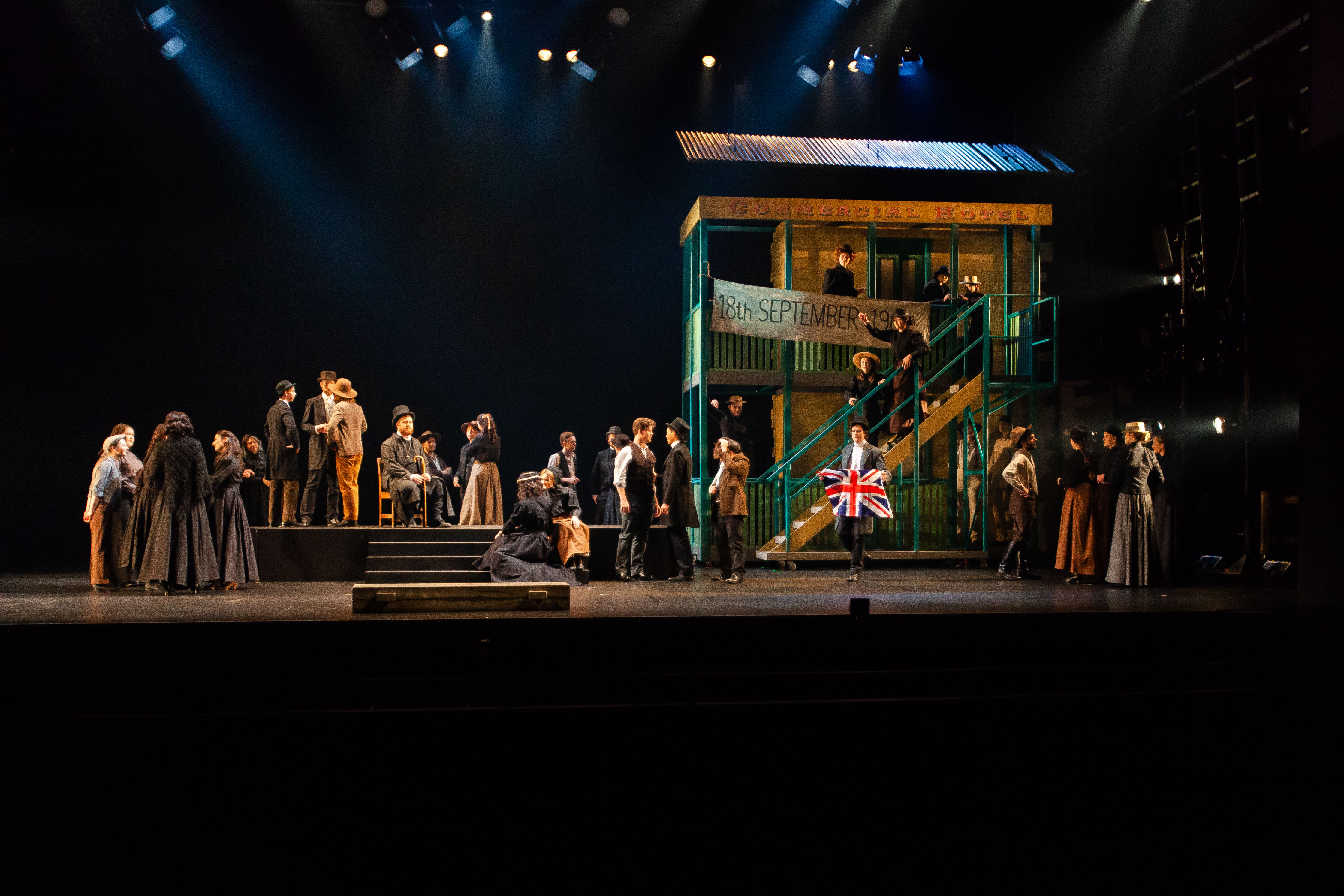
The township. Image: supplied
OB: It revolves mostly around the Callaway family. I am Reverend Callaway. Xenia is playing Mrs Gladys Callaway; she’s my sister-in-law. There’s also her daughter Veronica, and then Veronica’s two love interests— two young men that she’s interested in. These are the five main characters.
Are they all your classmates at the Conservatorium?
OB: Yes.
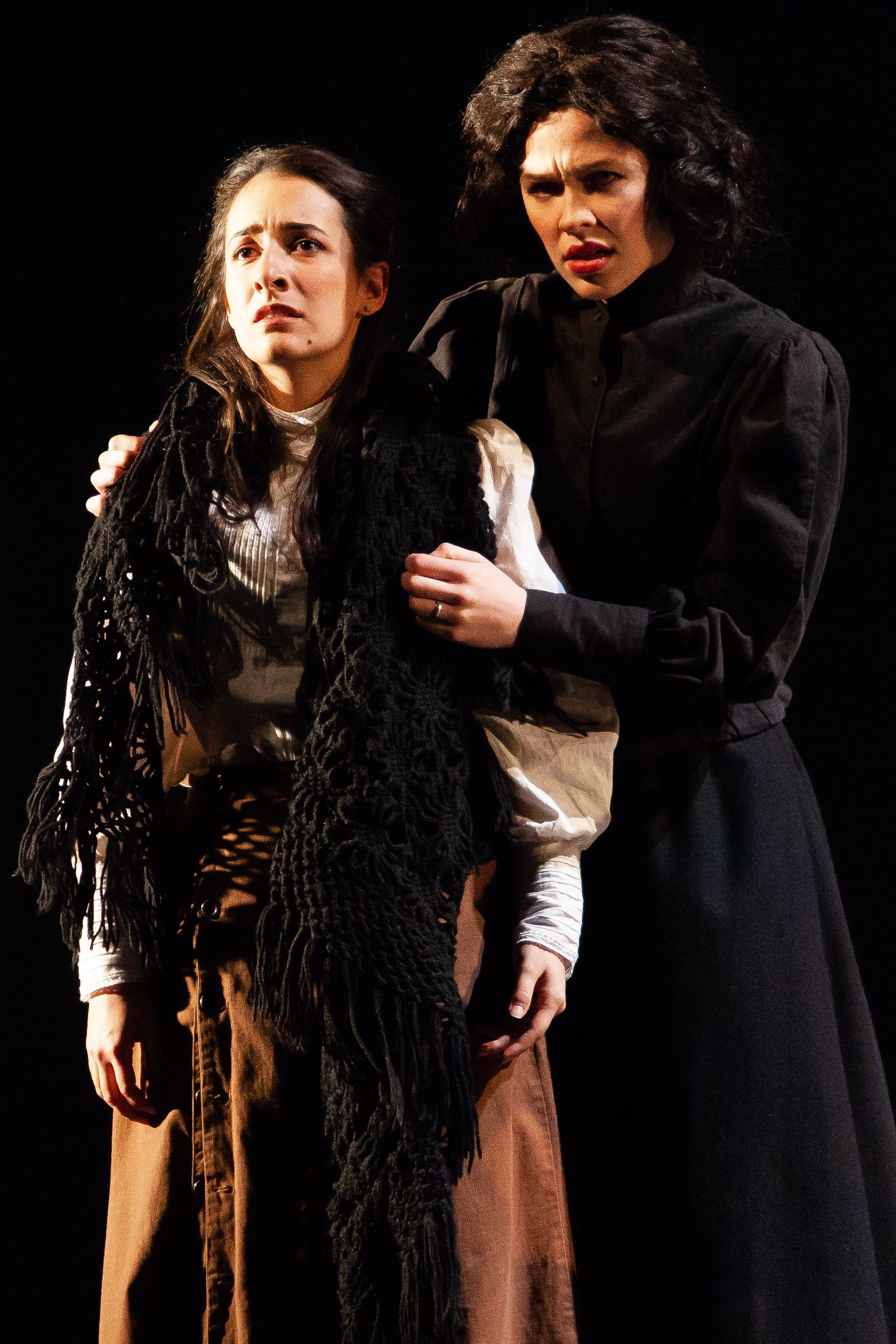
Xenia Puskarz-Thomas as Mrs Gladys Callaway (R) with her daughter Veronica (L). Image: supplied
Was the show written for you, or was it written as an independent project and then cast from within the Conservatorium?
XP: I think they already had the ideas, but as the project developed they have adapted it to our voices and voice types— so it’s been really interesting to work with everyone in that sense, to have a part that is tailored to your voice.
OB: I think the composer Paul Dean had already composed a chunk of the opera, before meeting any of us, but it’s been probably a year in the making, knowing that we were doing certain parts, so from then on he has been able to adapt it and write the rest of the opera to suit certain voices in the roles.
That’s so awesome, so you actually get to create original roles. Lots of singers never get that opportunity, let alone at the very beginning of their careers.
XP: Yeah, it’s very exciting. It is scary, too, because obviously you have nothing to base it on— no-one’s ever done it before, so you are sort of searching through the dark; you’ve got to find your own way and figure things out. “Why would you have to do that?” “Why would that happen?” “Why are they the way they are?”—and you’re at the centre of it, so it’s a bit scary but it’s also very exciting.
That’s great. So what are you learning through the process of embodying these characters and giving them a voice?
OB: For me personally, my character is quite dark and he has a lot of conflicting emotions within himself, and I’m really learning so much about myself as a performer by having to create this character that I guess is quite far removed from how I see myself. He has these rather large mood swings within the space of a couple of sentences – he has this very public persona as a priest but also a very different personal persona when he is out of the limelight, so I’m really enjoying getting to do that dramatization of those two conflicting characters within the one character.
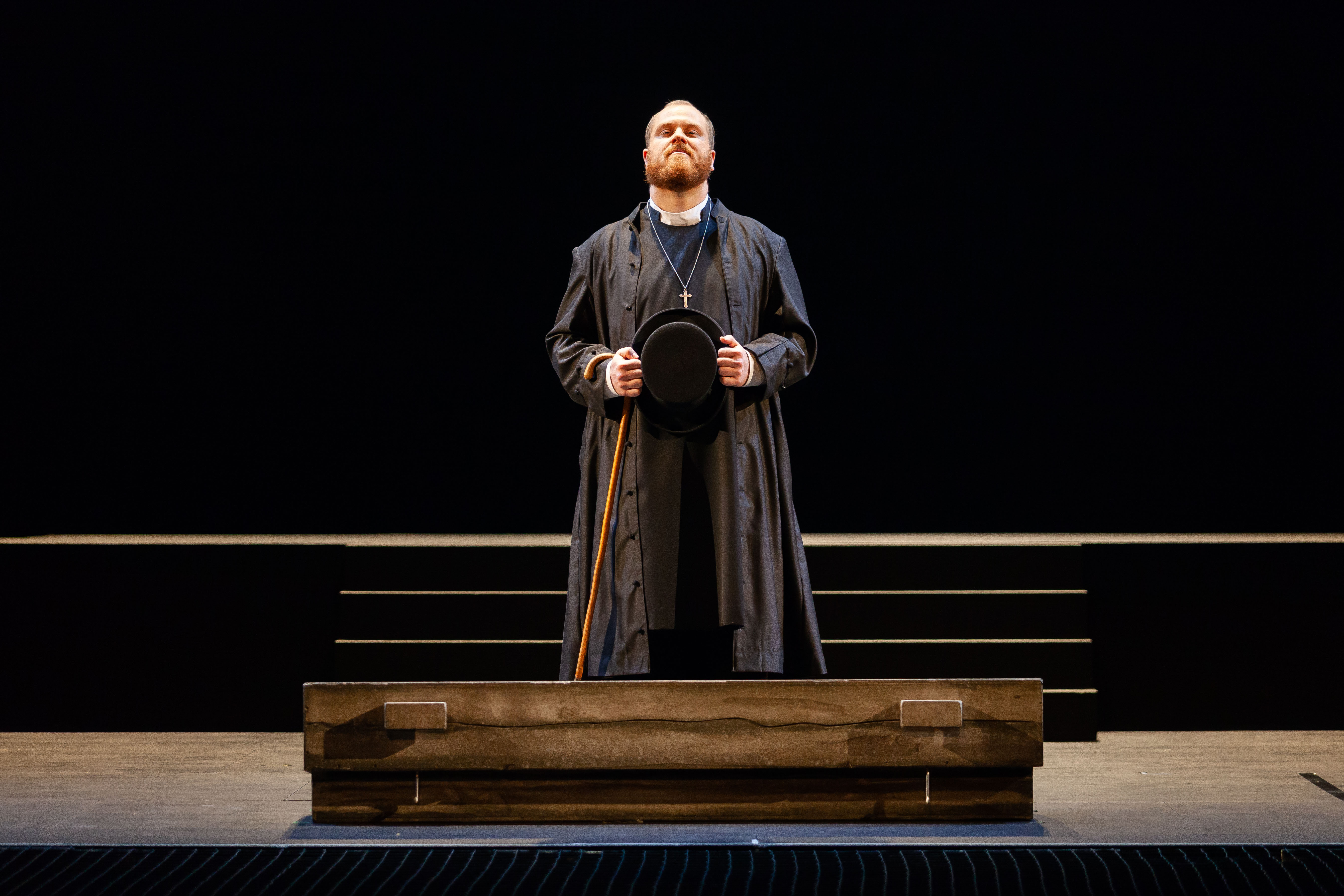
Oliver Boyd as Reverend Callaway. Image: supplied
It sounds dangerous for a clergyman to have that kind of instability.
OB: Yeah. A little immoral.
What about you Xenia?
XP: Very different from the Reverend; Gladys is very grounded and actually is this amazing woman that I think a lot of people would look up to. She is really strong and no matter the hurdle that comes her way, she somehow manages to keep on persevering and being the best mother she can be. She’s got lots of dreams of equality for women. Her goals are something that a lot of women will identify with today.
And what about the other characters and your co-stars? What is it like as you see them working through these characters?
XP: All of us have studied classical voice and opera at the conservatorium together. It’s got a huge cohort and we are very close with each other, and it’s lovely to work with friends and to have that rapport and support from your colleagues.
OB: Again, I think for them they have their own different elements of their characters that are challenging. Like the two young men that are interested in Veronica: one of them is the one that she actually likes, and when things go south he just up and leaves, whereas the other one that she doesn’t necessarily like, is the one who actually has the strength to stay and support her through the hard times. I think it’s really interesting to see how they tackle that.
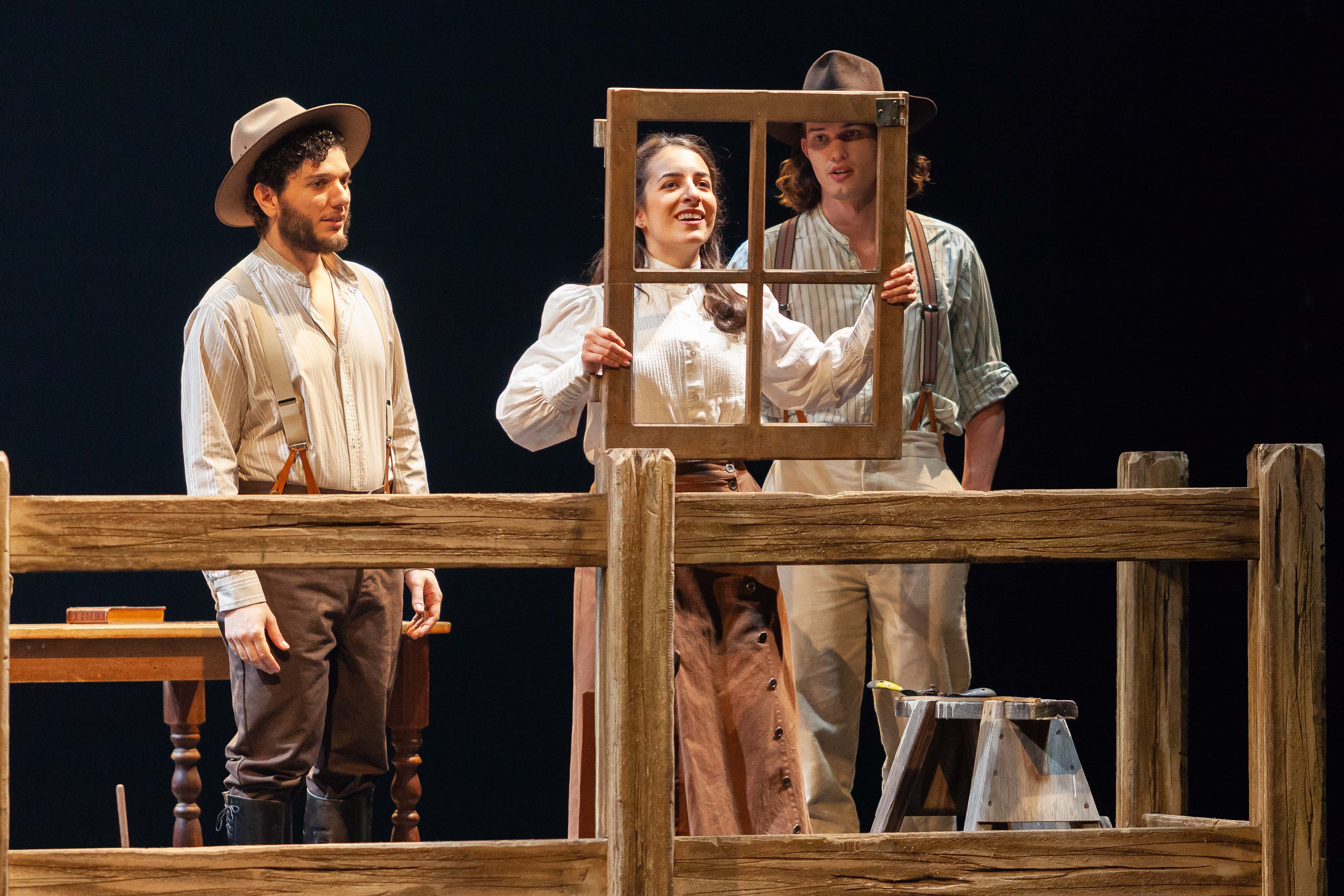
Veronica Callaway and her two young suitors. Image: supplied
Vocally that must be quite interesting for your character as well—that Jekyll and Hyde kind of behaviour, or in their case, the niceness and then that kind of weakness. Is that reflected in the music, is that explored vocally?
OB: Yeah it’s reflected in the music but also vocally, the way that I have to colour my voice to suit those two personas. For me it’s finding what kind of vocal qualities I want to give to the different lines so that there is that difference between the tones. There are charming qualities to some of my lines, but also there are some that are very nasty and in your face, so it’s been great to do that and work with the director on what my character is thinking.
So the director is the librettist, and is the MD the composer?
OB: No, the Musical Director is the Head of Opera at the Conservatorium, Nicholas Cleobury, but Paul Dean is around, he is the Head of the Winds department so he pops into rehearsals all the time and I think there is a constant dialogue between him and the librettist and the conductor as to certain things that needed to be changed to make them more dramatically effective. For instance, in one of my parts, there was a word that needed to be brought out more, and in order for that to happen I just needed to take one quaver off a note from the previous phrase so I could breathe and really accent that next word, and it was so good to be able to talk to the composer about it right then and there. He is very, very amenable to changes and making it work for us, so it’s great.
So you’re already answering my next question, which was, what is it like working with the composer and the librettist on a brand new work. What about you Xenia, how are you finding that?
XP: Yeah I totally agree with Ollie, it’s been a dream, it’s a different process obviously being able to have the composer tailor our parts to our voices, range and colour. Working with a director who is also the librettist has been wonderful, just being able to ask and understand why a character does certain things, why they’re the way they are, and their relationship with others, and these aspects of things that go beyond just the written text that’s on the page. We can really get to the nitty gritty of the characters.
So what is it like doing productions generally at the Queensland Conservatorium? I mean I imagine it’s not usually like this!
OB: Musically, it’s so much more challenging than a lot of the other music that is in the students’ canon of work I guess. But the productions and the opportunities that are afforded the students at the Conservatorium in Queensland are just amazing (and I’m not paid to say this stuff)! I know personally, just from being there in my early years I’ve been seeing the development of the opera program, and the emphasis that they have put on quality performance opportunities, and the amount of resources that they put in to their opera productions— it’s just phenomenal. They’re almost like professional productions, and they are getting in some of the best directors from Australia and internationally to come and work with the students, so the experiences and the professional contacts are just invaluable, and it just puts us on the best foot, doing that within the safe environment of a student production.
Where you’re allowed to learn and make mistakes.
OB: Yes, exactly.
It sounds fantastic. So I assume that this production would be part of your course, is that correct?
XP: Yes, I’m in my fourth year studying Honours, so it is one of my electives to do the opera project, and in the end, yes, I will get a mark for the whole rehearsal process and my performance. So it’s an assessment. It’s a wonderful assessment, one that you want to be doing, and it really allows you to do what you love— which is performing.
Yes, but you’re also being creatives in a way as well.
XP: Yes, it’s a really big honour to be a part of this performance, it feels like a professional performance because we have the opportunity to give a premiere. Even in professional opera companies that’s rare, and it’s a big deal, even for opera in Australia, because we are slowly adding to our Australian operatic repertoire.
It’s very exciting! What do you think Dry River Run means for Australian opera more broadly?
OB: Well I think it’s really interesting; Paul Dean’s brother is Brett Dean, who is a renowned Australian opera composer, yet Paul himself in his own right is a fantastic musician and composer, but this is his first opera. So, I guess this is just another –
Sibling rivalry?
OB: [Laughs] It’s another family thing, that they will be adding to the legacy of Australian opera as composers. I think Paul has always had a love for opera but— look, I could never compose an opera because it is such a huge thing, and I think that a lot of composers baulk at the thought of it, so I think that getting this first one out of the road might be the gateway for Paul. Hopefully we’ll see more Paul Dean operas in future.
XP: Yes, also the fact that it’s very uniquely Australian, so Dry River Run is quite important in terms of Australian history, and there are cultural things that are unique to Queensland that we are showing in this production. So it’s really exciting for us Queenslanders, to have a historical Australian opera being created and putting Queensland culturally on the map.
When I was doing my undergraduate degree I did a project on Australian opera history actually. Have you heard of Richard Meale’s opera Voss, back in the 80s?
XP: Yes I have I have heard some of the recording.
It was a big landmark in Australia’s operatic history. I looked in detail at Voss and Black River, which is a one-act opera with Indigenous themes by Andrew Schultz, and then also Batavia, which was by Richard Mills (which, if you don’t know it, is based on a true story that is well worth reading about cause it’s incredibly bloody and revolting but also utterly fascinating). I think there is a shortage of real Australian stories that are told in opera. It’s slowly changing [Edit: Opera Australia have just announced that they will be premiering Elena Kats-Chernin’s opera Whiteley next year], but of course it’s very hard with the huge expense of opera to get any of them performed, so it’s incredible that the Queensland Con are doing this, and so lavishly. Anyway I shouldn’t talk too much; this is your interview. Tell us why people should come to see your show. Here’s your moment for a promo!
XP: Obviously because it’s new, and uniquely Australian and Queenslander; but it’s also going to be very moving and dramatic. There are some adult themes in the story, and the style of music and the style of direction that we are getting are mixing together to make a really unique opera. It’s nothing like what I have ever done or even seen before, and I really think it will challenge your perception of opera, and maybe also highlight some things about the human condition itself.
Why would it challenge people’s perceptions of opera?
XP: Well, the direction is kind of surreal, and usually drama and plot centres the work but this opera is more about revealing our characters, who they are and what their values and their ambitions are. It’s done in a different way that I don’t think I’ve ever really seen before in opera.
OB: I think the style that the director is trying to work with is a kind of Expressionism. It doesn’t follow strict chronology, it’s about several different themes that all culminate and lead to a point…
XP: It’s hard to explain without giving everything away!
So it’s a non-traditional narrative structure.
OB: Yes. I mean, it’s not so abstract that it’s difficult to make out what’s actually happening, it’s just that it doesn’t necessarily follow a straightforward plot.
XP: Or traditional opera direction. It’s like putting on a different pair of glasses, and that’s why I said it’s going to change the perception of opera.
Does it have orchestral accompaniment, or is it piano?
OB: It has an orchestral accompaniment, and Paul Dean says he is a fan of Wagner, so he has put in a Wagnerian-sized orchestra.
Oh wow!
OB: It’s enormous, yeah. I think they are planning to actually alter the pit to fit in the percussion section. It’s going to be something that’s interesting for us as students, to be singing over such a huge orchestra, but the Conservatorium theatre is fantastic, so hopefully it’ll all come together.
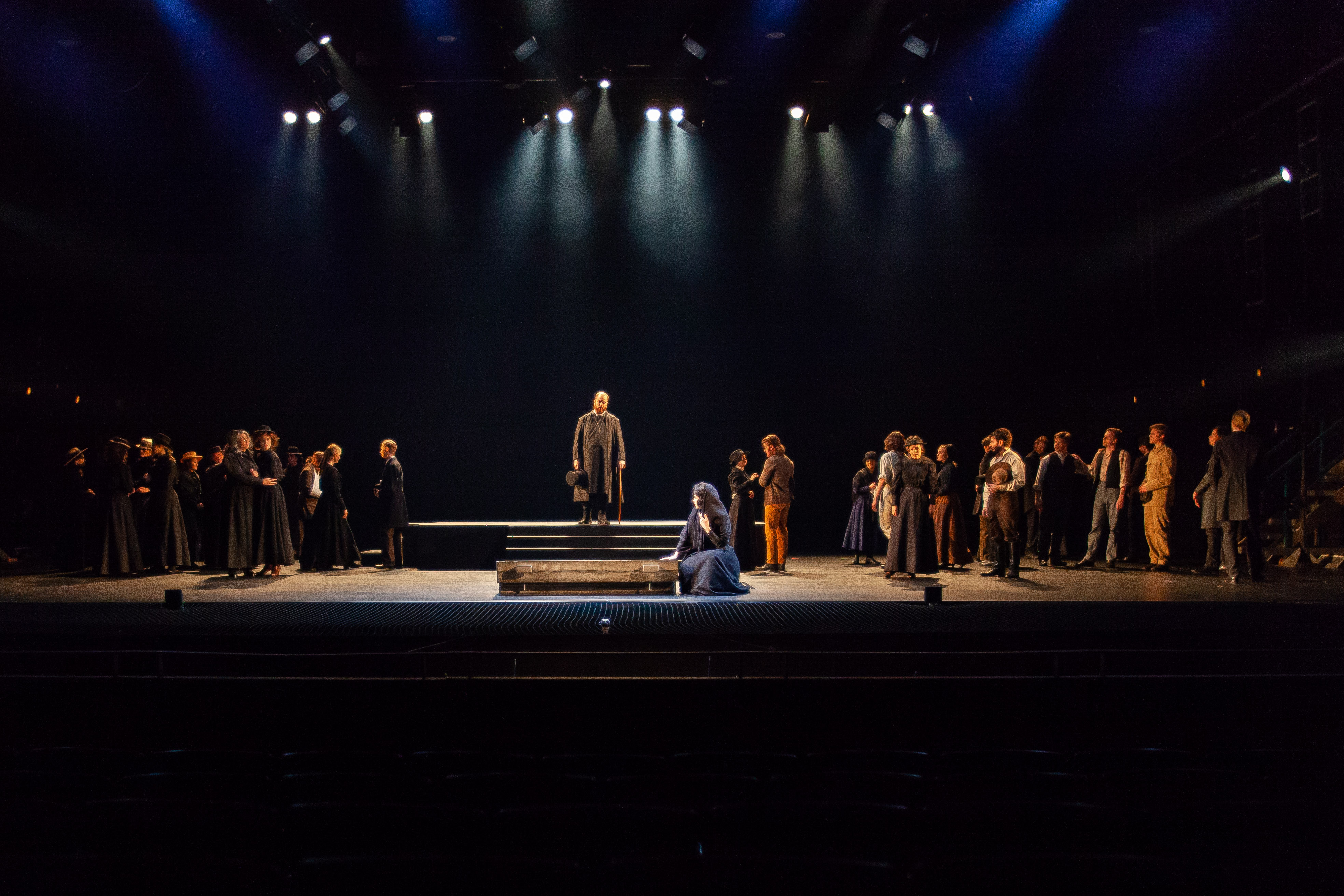
This production is on an impressively large scale. Image: supplied
Wagnerian, hm? That’s interesting. It is tonal, or atonal, the musical language?
OB: The more you listen to it, the more tonal it becomes.
XP: I think it’s hard to categorise Paul Dean’s work, it’s a modern style of composition but there are more traditional operatic elements, there are still legato lines and still some beautiful melodies that will be very affecting. I overheard Paul Dean saying that there are musical elements that he uses at some points to represent characters, like Wagner did himself. He uses these over time to reference the characters’ development.
OB: For instance, for my character he has created eight chords, and everything that develops within my character is based on these eight chords; he uses various variations and augmentations. Each character has identifying musical features, for instance one of the boys has a wood block sound that is uniquely his. Veronica’s music is more tonal with more use of legato lines to reflect her character. Paul Dean is a very academic composer, in that everything has been thought through and it is all very specific. So I think it will be interesting when someone does their PhD on Paul Dean’s first opera.
Maybe you can do it Oliver!
OB: [Laughs] Maybe, yes.
Well it sounds very exciting, and I’m just sorry I won’t be able to get up to Queensland to see it. Are they recording it?
OB: Yes, the ABC is recording it for delayed broadcast.
Well, I wish you absolutely all the best, I am so glad they are recording it for posterity—and for my sake, so I get to see it—and so that the whole country can see and hear you!
OB: Thanks.
XP: Thank you so much.
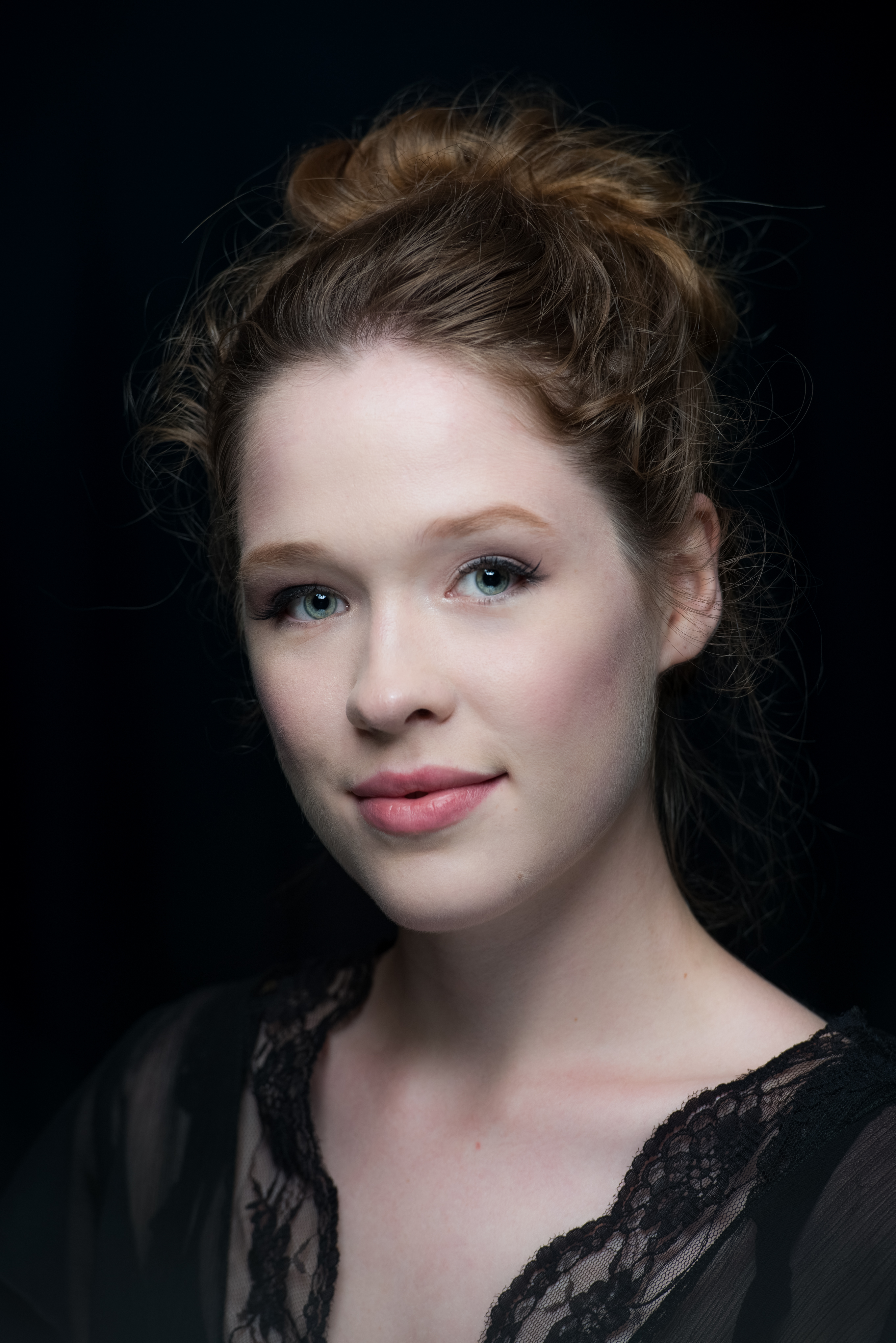
Xenia Puskarz-Thomas
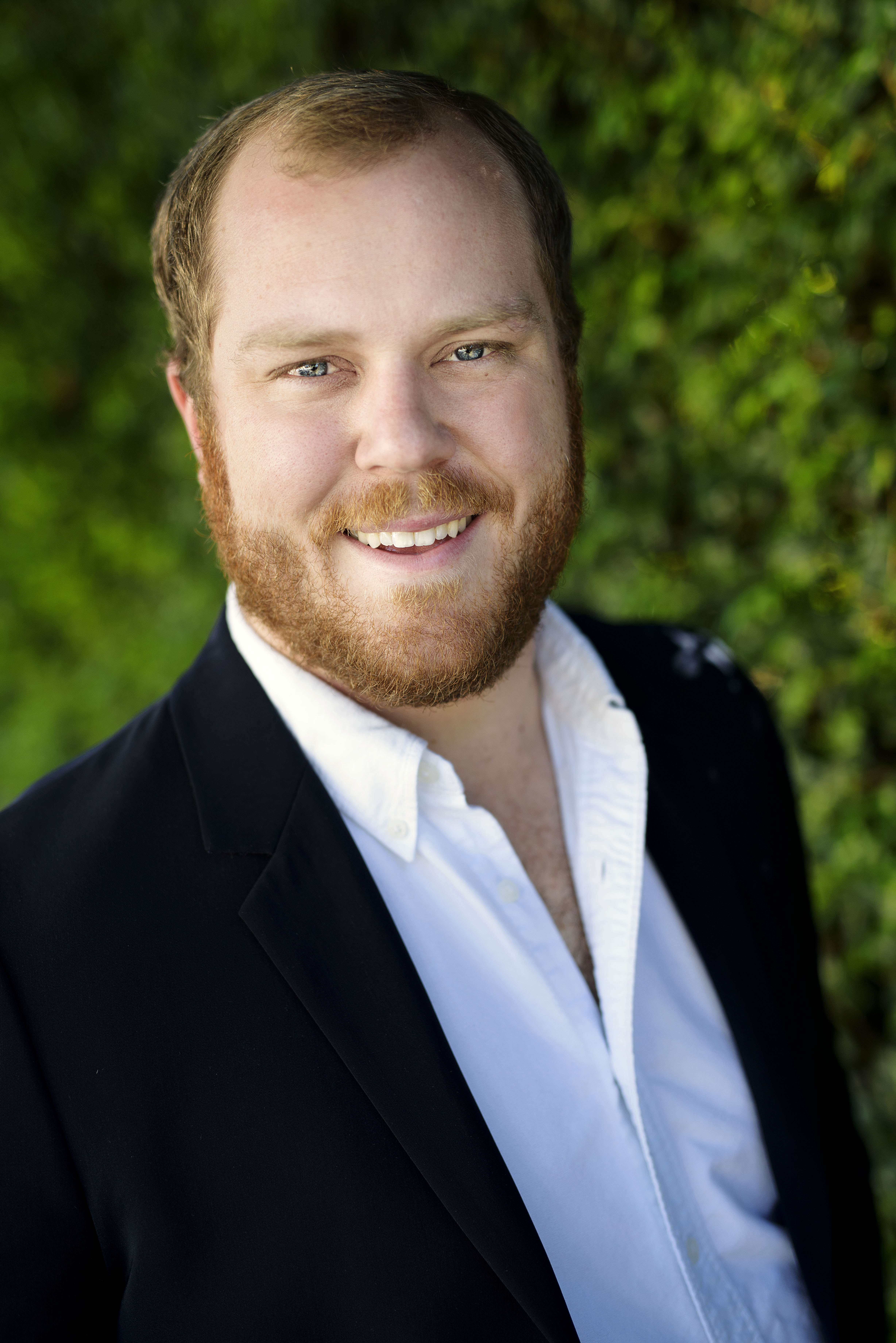
Oliver Boyd
_____
___________
Readers interested in finding out more about Dry River Run can also check out Angus McPherson’s for Limelight magazine here, which is an interview with composer Paul Dean. Griffith University has also shared a few beautiful videos, such as this one.