The Song Company: Burden of Truth — An Extraordinary Achievement

Originally published in Sydney Arts Guide
 HOLLY CHAMPION

The Song Company : Burden of Truth Pic – Jackson Raine

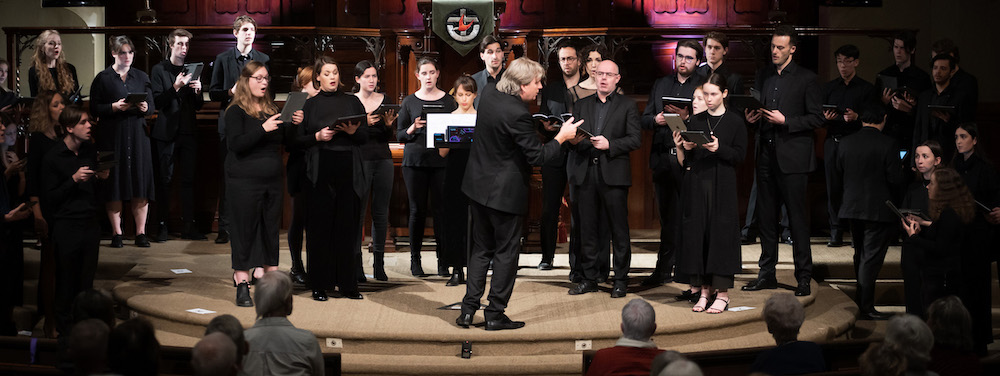
This concert was the second-last performance in a program that has successfully toured from Melbourne to Sydney and will finally be performed in Canberra on Thursday 10th June, at Yarralumla’s Albert Hall. The Sydney iteration of Burden of Truth is a collaboration between The Song Company and Vox, a young adults’ chamber choir under the Sydney Philharmonia Choirs, as well as with the teenage singers of the Conservatorium High School, the Song Company’s Education Partner. Consequently, this is a very youthful concert, with no-one on stage (except Artistic Director Antony Pitts) over the age of 50. These fresh and supple, highly trained voices combined in gorgeous, lush harmonies as they gave the world premiere run of Pitts’ own work, Transiens, as well as a new a cappella arrangement of Gavin Bryars’ famous Jesus’ Blood Never Failed Me Yet, using a looped recording of a nameless homeless man singing a half-remembered, half-improvised hymn. These two modern works make up the lion’s share of a program of interconnected sacred choral music that spans the 16th to 21st centuries.

In Sydney, this religious music was contrasted with a very secular venue: The National Art School’s Cell Block Theatre was literally once the women’s wing of the old Darlinghurst Gaol, but has more recently been completely gutted to become a vaulting cathedral-like space, with the traces of its old stairwell and cells still visible in the rough-hewn sandstone. Fitted out with funky steel scaffolding, the venue’s juxtaposition of the old and the new is, in fact, perfectly suited to the Song Company’s ‘menu’. 

The hors d’oeuvre was a traditional four-part hymn by James M. Black, His Love Never Failed Me Yet, sung in simple and lovely four-part harmony by the Song Company singers, who surprised the audience by starting the concert behind us. (A couple of latecomers popping up behind the singers and being shooed away provided some muffled laughs). This intriguing use of the space, in the manner of a chapel, was only just beginning. The singers began processing as if up to the altar, humming the plainchant melody Jesus autem transiens (our amuse-bouche course for the afternoon), as they were joined by dozens more singers from the Conservatorium and Vox, all pouring into the venue from the side doors. Once at the ‘altar’, they broke into full monophonic voice. Pitts’ conducting was precise and the singers tightly synchronised; no easy feat with plainchant’s often ambiguous rhythm. Perhaps spellbound with the reverent atmosphere, the audience did not applaud.

Our salad course, to continue the metaphor, was William Byrd’s 1605 motet Ave verum corpus. At the first notes, my husband (himself a long-time choral singer) sank back into his chair with a happy sigh, mouthing along with the words. It was truly a wonderful, rich performance of this immortal polyphonic work. Yet, in a fascinating example of audience groupthink (or was it just a painfully middle-class fear of clapping between movements taken to extremes?) there was still no applause.

Our main course, Jesus’ Blood Never Failed Me Yet, started almost imperceptibly softly with the fade-in of the looped recording. With his quavering voice, worn by age, rough sleeping and hard living, the unknown ‘co-composer’ of this work seemed for a moment to be an unexpected interloper from the streets of Darlinghurst. Over and over, trapped in poverty and in time, he sang his semi-garbled version of Black’s hymn, while the trained singers gradually built up a complex array of ever-changing, overlapping words and harmonies around it. Pitts provided expert direction, not only in the swirl of song but also in the complex choreography, as singers continually created small choirs, then shifted around slowly to disband and form new ones. The work is beautiful, but it is so long and repetitious as to be quite trance-inducing and a little dull, despite this sensitive performance. The end of the work fades out again, with only sopranos and altos with their ethereal pianissimo humming, and finally just the looped recording receding into the distance. Still no clapping.

Our dessert course was a triptych in 25 voice-parts. Transiens held our attention more thoroughly than Jesus’ Blood, even from the beginning with a strong bass drone that contrasted sharply with the preceding work’s ending. Transiens is a monumental new work, profoundly influenced by Renaissance sacred choral music in general and, of course, by Robert Wylkynson’s canonic treatment of Jesus autem transiens in particular. In its antiphonal use of small choirs (with more dynamic vocal placement throughout), there is a definite relationship to Tallis’s Spem in Alium here: not surprising when one reads in Pitts’ bio that he has also composed the work XL, a 40-voice-part companion piece to Spem, which, also in 40 parts, is beloved by ambitious choristers everywhere. Rich with chiaroscuro and the tension between chaos and order, sometimes almost schizophrenic in its imitative polyphony, sometimes a glorious wash of sound like waves rolling over the audience, Transiens is a significant new addition to the Australian choral repertory. Pitts should be extremely proud, not only of the composition, but also of the multiple young collaborating choirs and the remarkably unified sound he has achieved with them. All this happily exists on a new album, recorded in isolation during Covid and available now on Bandcamp and as a limited edition vinyl recording. 

What an extraordinary achievement for The Song Company, to have completed this project during what is surely one of history’s most difficult periods to be a singer. They must be thanking their lucky stars that their Melbourne concerts came just before the current Victorian lockdown. How lucky are we, too, to be able to attend concerts like this maskless, and with very little concern about Covid at the moment, while Victorians (not to mention Indians and so many others around the world) are trapped once more in their homes, fearing sometimes for their lives. 

Like the audience (who finally clapped very enthusiastically after an agonized moment of silence at the very end of Transiens) I heartily enjoyed this musical menu with its cleverly cohesive mix of styles and periods. I highly recommend that Canberra-based lovers of choral music, especially Christian sacred music, attend the final concert on the 10th of June.  

The concert took place at 3pm on the 29th May 2021 at the Cell Block Theatre, National Art School.

If you don’t have the chance to get there and see The Song Company in person, you can buy the album of the music either as a digital download or a vinyl record at https://thesongcompany.bandcamp.com/  or visit  website at http://the.song.company. It’s a great way to support your local artists and keep Arts alive in Australia.

Featured image : ‘Burden Of Truth’ pic  Christopher Hayles photography

Musica Viva: Nicholas Fleury, Emily Sun and Amir Farid

Originally published in Sydney Arts Guide

Sydney Arts Guide

 HOLLY CHAMPION

It was a rainy, cold Saturday afternoon in Sydney on June 19th, with a local Covid cluster once again threatening to destroy the school holidays. The throng of suitably be-masked audience members eagerly milled into the City Recital Hall for the Musica Viva chamber concert by soloists Emily SunAmir Farid and Nicolas Fleury, which promised to be excellent. The average age of the audience was quite high, as is usual for classical matinee performances in Sydney, and I admired their bravery until it occurred to me that, being over 50, most of them had already probably been vaccinated. I admit to being a little jealous. Meanwhile, my friend had fallen prey to the casual cruelties of finding parking in the CBD in the rain, so I left her ticket at the box office and kept an eye out for her arrival, as I took my seat. 

This concert was always going to have a special meaning for me. The final item on the program, the famous 1865 Op. 40 Trio by Brahms, is one of the few piano trios in The Canon to be rebadged as a ‘Horn Trio’, and it has a fond place in my heart. It was the piece I performed (as pianist) for my HSC Music Extension exam twenty years ago with my teachers, one on violin and one on clarinet standing in for the Waldhorn, or natural horn; and then later again in my undergraduate years with my fellow students on violin and viola, in the continued absence of any good hornists. (Advice to young musicians: learn the French horn. If you’re any good you’ll be in very, very hot demand.) I had idly fished the sheet music out of a dusty garage sale box in the late 90s and slowly, inexorably, I fell for this work’s charms: its passionate, lush harmonies, vivacious hunting motifs, pianistic and synchronistic challenges and hearty German Romantic flavour. I have listened over the years to many different recordings, performed by musicians far more capable than I have ever been: the Perlman/Barenboim/Celvenger video on YouTube is a particular standout. This, then, was to be the real treat of the afternoon: a live performance of the Horn Trio by a supergroup of young international soloists, complete with (spoiler alert) an actual horn.

First, however, we had Mozart’s Horn Quintet K407 (1782), as arranged by Ernst Naumann (1910). Composer Gordon Kerry’s insightful program notes point out how Naumann may have been thinking of his friend Brahms’ great Trio when arranging the Mozart work, so this is a natural programming choice. Kerry also tells us about Mozart’s much-abused friend, the horn virtuoso Joseph Leutgeb, for whom the genius wrote his great works for horn, including the Concerto No. 4 of “I once had a whim and I had to obey it/ To buy a French horn in a second-hand shop” fame. While Mozart was a pianist and violist who liked to give the viola a special role, as he did in this Quintet, there is no viola in Naumann’s arrangement and the piano is relegated to an accompaniment role. The charmingly tousle-haired, musically sensitive pianistic powerhouse Amir Farid was therefore a little underused, and the horn and violin are the stars. Emily Sun’s totally assured, expressive playing on her beautiful 1760 Nicolo Gagliano violin and even the splendour of her dress seemed to mark her out as the trio’s leader, though perhaps this is mostly related to the greater degree of physical movement that is naturally permitted by the violin, in comparison with the horn. Fleury certainly did not disappoint however, with an outstandingly mellifluous rich tone, perfect precision of intonation and virtuosic facility across the registers.

One of the best things about chamber music is watching the eyes, and my seat allowed me to indulge. I was fascinated by the interplay between the performers and by the expressions on their (all strikingly attractive, it has to be said) faces and in their body language. In the Mozart, they were all ease, joyousness and vivacity. The brisk but never rushed tempo of the first movement gave way to a lovely lyrical second movement with beautiful messa di voce effects on violin in the A section and a more dramatic, but short B section. In the third movement some of the Brahms Trio’s ‘hunting’ flavour was foreshadowed, with brilliant scalic runs, trills and arpeggios. Finally the piano got a brief moment to shine in the coda, but thankfully Farid never seemed to have the sense of arrogant ego that mars the performances of many a piano soloist, especially in a chamber context. The three virtuosi were beautifully in sync with each other, not just in terms of timing but also in mood, as evident in their faces and bodies.

Fleury then took a well-earned break while Gordon Kerry himself came to the stage, thanking everyone for “braving the weather and plague” and noting the contribution of the next piece’s benefactor, Julian Burnside AO QC, who is a great philanthropic supporter of the arts “simply out of the belief that the arts are good for us and we need more of them.” (Having missed out on his Greens senate bid last year, could he please just lobby our government…?) Kerry explained that he composed the upcoming little Sonata for violin and piano to play to each performer’s strengths. It is a premiere run of this work, which is always exciting.

The Sonata began with dramatic high harmonics on violin and shimmering chords on the piano. The stop-start, stop-start phrasing built suspense in a painterly, impressionistic style, with the pulse often obscured through time signature and tempo changes. Again, I felt that Sun on violin was really the star here, though Farid had more to do than in the Mozart. The intense focus on the faces of the performers reflected the difficulty of this made-to-measure work, which required exceptional technique and attention to each other’s cues, and explored various different violin techniques such as fluttering cross-string sul tasto and aggressive spiccato. Gradually descending in tessitura in both instruments, some more lyrical and declamatory melodic material brought us to the close. Kerry’s new little baby has been born, and it is demanding both of the performers and the audience, but also very rewarding.

Now for the one we’d all been waiting for: the Brahms. Sun stood up and took the mic, again seeming to take the lead. She explained how this concert had “nearly not happened” as they had all been languishing in lockdown in Melbourne, forced to spend countless hours on FaceTime demonstrating tempos and experimenting out-of-sync with each other– surely an incredibly frustrating experience, when chamber music requires the most attention to synchronisation of all the genres. Farid even had to cope with only a digital piano at home! Eventually however they made it to real rehearsals in Sydney and this gloriousness was born. 

I say gloriousness, because the Brahms lived up to all my very high expectations. I wept slightly at the opening chords. The three young stars were much more daring with rubato and with tempo in general than I ever was, having complete mastery of their instruments. Finally Farid really came into his own: the piano part is quite challenging and the three instruments have equal roles in this work, operating as a tight team. Here, their faces and bodies showed passionate intensity, marked by moments of great joy, all of which was perfectly matched by their musical expression. The Andante’s sweeping pastoral vistas gave way to the Scherzo’s intense and joyful hunt, and the Adagio Mesto’s beautiful funeral dirge, written in memory of Brahms’ mother, tore at the heartstrings. 

My only quibble was that for all the Artistic Director Paul Kildea’s notes in the program about Brahms’ Luddite scoring for the natural horn, Fleury played this on the modern valved horn, despite being trained in both. It is certainly a greater challenge on the Waldhorn, but surely Fleury would be up to it? A recent Limelight interview with Fleury has him stating “I will be performing both pieces on the modern instrument. The key to an accurate interpretation is to always remember what the composer intended. So, despite using my modern instrument, I will use my left hand (the valves system) far less than I usually would in music like Mahler or Debussy for example.” This seems to me as if Fleury is hedging his bets. And with the ideological developments of the past few decades, do we even need ‘accuracy’ and ‘fidelity to the composer’s intentions’ in interpretations any more? On the other hand, I like the idea of using the Waldhorn, if only because the closer a performance gets to the limits of the performer’s abilities, the more exciting it is for the audience.

At any rate, Fleury’s performance is extraordinarily beautiful, as are Sun’s and Farid’s. Brahms’ exuberant Finale is taken at breathtaking speed and seems to positively crackle with excitement. This is a performance well worth catching: the Finale rounds out a wonderful, if slightly short, concert. Though she never made it to the seat next to mine, fortunately my friend did catch most of the concert and thoroughly enjoyed it too. In fact, it was so much fun that I think I will watch tonight’s livestreamed performance as well. In the meantime, I’m off to go and brush up on that Finale at the piano.

Production photography by Annelise Maurer

Strategies for effective (piano) sight-reading

by Holly Champion

Developing the skill of sight-reading is often one of the biggest struggles for piano students –or indeed students of any instrument, but keyboard instruments and the harp are arguably the hardest, due to the sheer number of notes you have to read.

It can seem totally overwhelming, especially when you are truly sight-reading—that is, you have never seen nor heard the piece before. It can be far easier to ‘sight-read’ a piece that you are familiar with from hearing it before, as your aural and memory skills are working to support your sight-reading skills. I often recommend to my students who “hate sight-reading” or “are hopeless at sight-reading” that they try playing through easy arrangements of famous classical pieces, Christmas carols or pop or rock songs that they know well. Aside from being easier, it can also be more fun to play pieces that you and your family or friends recognise!  And of course, the more you practise sight-reading, the faster and smoother and better at it you will get. And as you get better at it, you’ll enjoy it more and more. Try to do at least 3-5 minutes of sight-reading in every practice session.

Continue reading

Two types of practice: Optimise your (piano) practice time

by Holly Champion

Many beginner piano students, or students of any musical instrument, don’t realise that practising your instrument isn’t just about playing through your pieces or scales. Practice is actually a whole field of knowledge, skills and strategies. In fact, a lot of what you learn in lessons (with a good teacher) is not how to play, but how to practise.* The ultimate aim of lessons should be to enable you to work independently on your instrument. Most professional musicians will still have lessons with a master teacher, especially now and then to ‘check in’ and keep up their professional development, but they are able to practise far more independently than beginner musicians can.

Most strategies for practising your instrument fall into two broad categories. I like to call these “learning practice” and “performing practice”.

Continue reading

It was a dark and stormy night: Outlaw Opera’s impressive debut offering

Review by Holly Champion. Four out of five stars ****

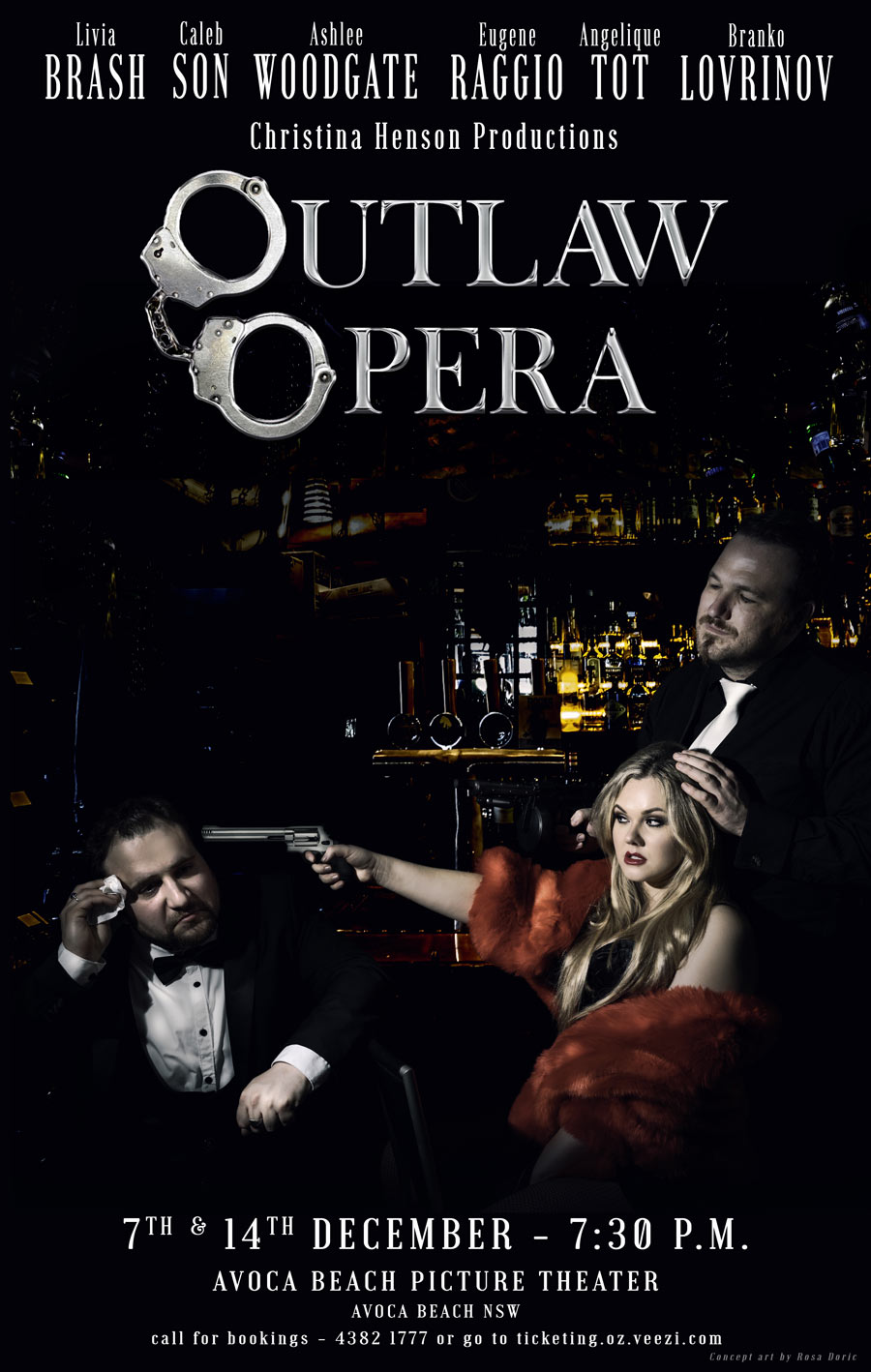
I met the extraordinary singer-vocal coach-director-entrepreneur-writer-composer-pianist (and, rumour has it, also -medical doctor?!) Christina Henson a few months ago, and it is clear that this recent import from the States is shaping up to be a real force to be reckoned with in the Australian opera scene. After coaching for three full operas on NSW’s Central Coast, Henson has now assembled a troupe of mostly young, emerging artists to create Outlaw Opera, a new professional-training opera company that seems to have as much chutzpah as its creator, and an apparent focus on the dastardly, the dark and the delicious of the operatic canon.


I attended Outlaw Opera’s inaugural self-titled show at its second performance on Friday the 14th of December. I expected a concert (or, based on the promotional images, perhaps a new Wild West opera) but to my delight this turned out to be a collection of fully-staged and costumed scenes, accompanied by the excellent young Noah Peres on piano.

Continue reading

Review: “Bohème, a piacere” presented by Divas on Demand

Review by Holly Champion. Two and a half stars **1/2

Intrigued to hear about a new Australian work based on Puccini’s beloved La Bohème, and also motivated by loyalty as my friend James Oberg was performing in the chorus, I attended the opening performance of Bohème, a piacere on Friday the 9th of November. Presented by Divas on Demand, this show can best be described as a kind of immersive cabaret mashup or ‘post-operatic’ work based loosely on Bohème and featuring extra songs from mid-century France, some jazz standards such as Autumn Leaves, and some hits by The Andrews Sisters. Overall, this was a very interesting and innovative, postmodernist concept that is to be applauded, particularly as it is coming from within the famously conservative world of opera.

However, it did not quite meet its potential in realisation. This was partly due to some strange choices made by director Nathan Gilkes and by writer/arranger (and accompanist and Artistic Director) Wendy Dixon, but it was also in large part due to having a cast with uneven levels of ability.

Continue reading

Lovely Luhrmann-like La Bohème from Central Coast Opera

Review by Holly Champion, 27 August 2018. Three and a half out of five stars.

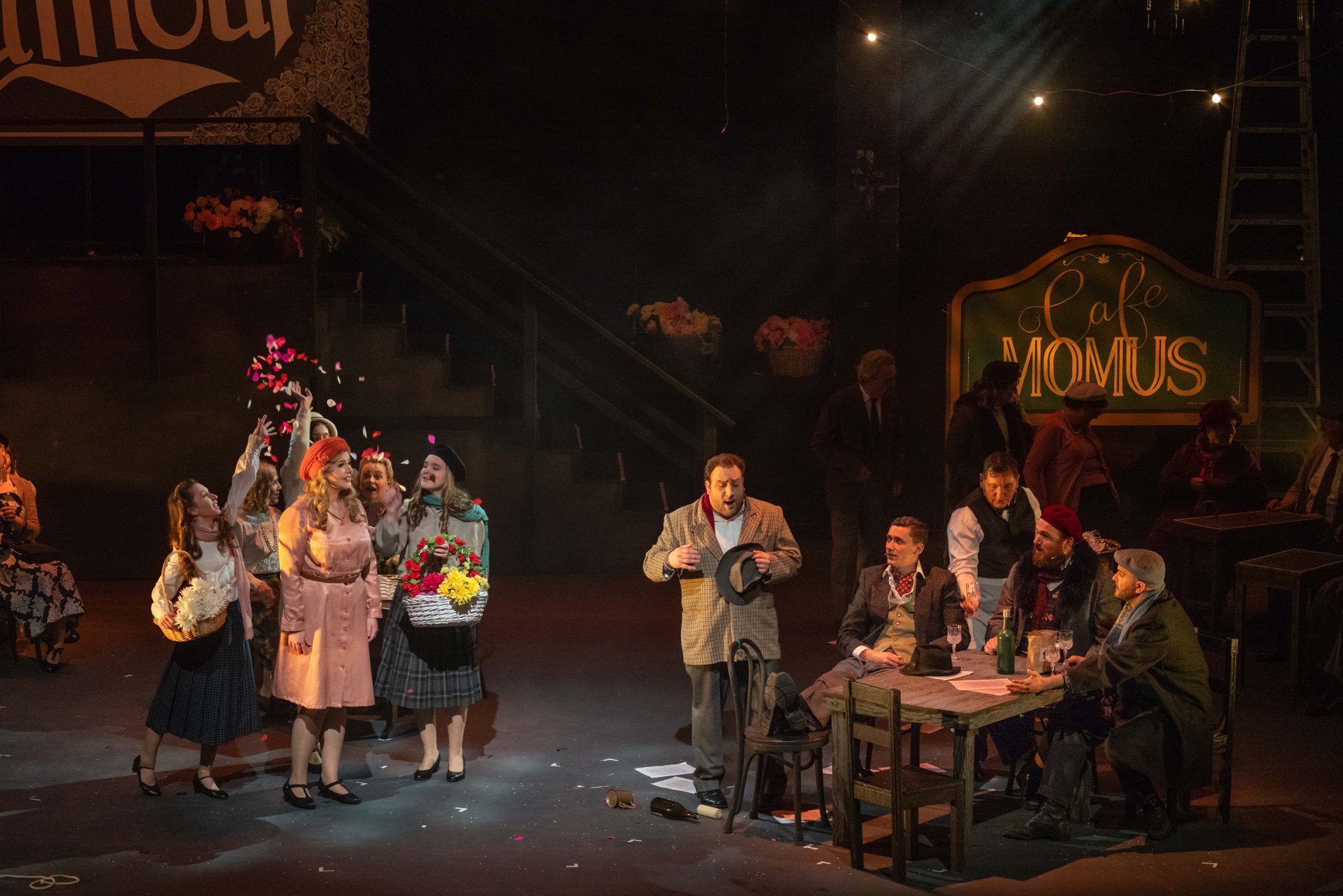
On Saturday I was unexpectedly asked to review Central Coast Opera’s new production of La Bohème, very late in its run—mainly so that the young artists could get feedback. I was delayed by Sydney traffic, but arrived just in time for the beginning of the Act I love duet. This Bohème is helmed by the young director Warwick Doddrell and well-established MD, Central Coast Conservatorium’s Artistic Director/ CEO Patrick Brennan, and it is a sumptuous, romantic and effective, if rather derivative, feast for the senses. It boasts a really gorgeous, complex lighting design by Damien Rice, lovely colourful mid-20th-century costumes by Kelly Denley and Janelle Fischer, and a veritable army of vocal coaches, repetiteurs and consultants behind the scenes. It is trumpeted by Brennan’s program notes as “by far the most ambitious opera project produced by the Central Coast Conservatorium under the banner of Central Coast Opera”. It is indeed a very large undertaking, and along with a large, soprano-heavy chorus, it is double-cast. I saw the ‘Beauvoir’ cast, which is mixed: some emerging opera stars, an accomplished tenor experiencing a bad night, and a wonderful musical theatre performer who is a little out of his depth…all slightly hampered by a strange sound design.

Livia Brash as Mimi, Branko Lovrinov as Rodolfo, with principals and ensemble in Act II.

Continue reading

Dry River Run: Full interview with cast members Xenia Puskarz-Thomas and Oliver Boyd

By Holly Champion, in partnership with Cut Common magazine, which has published the edited version of this article here.

This month, I sat down to chat with Xenia Puskarz-Thomas, mezzo-soprano and Oliver Boyd, baritone. Xenia and Oliver are singing two of the lead roles in the premiere season of clarinettist/composer Paul Dean’s first opera, Dry River Run, at the Queensland Conservatorium Theatre, Griffith University, from the 1st to the 9th of September 2018. Dry River Run has libretto and direction by Rodney Hall, and music direction by the conservatorium’s Head of Opera, Nicholas Cleobury. Tickets are available here.

__________

So, Xenia and Oliver, can you give me the lowdown on the plot and characters of Dry River Run?

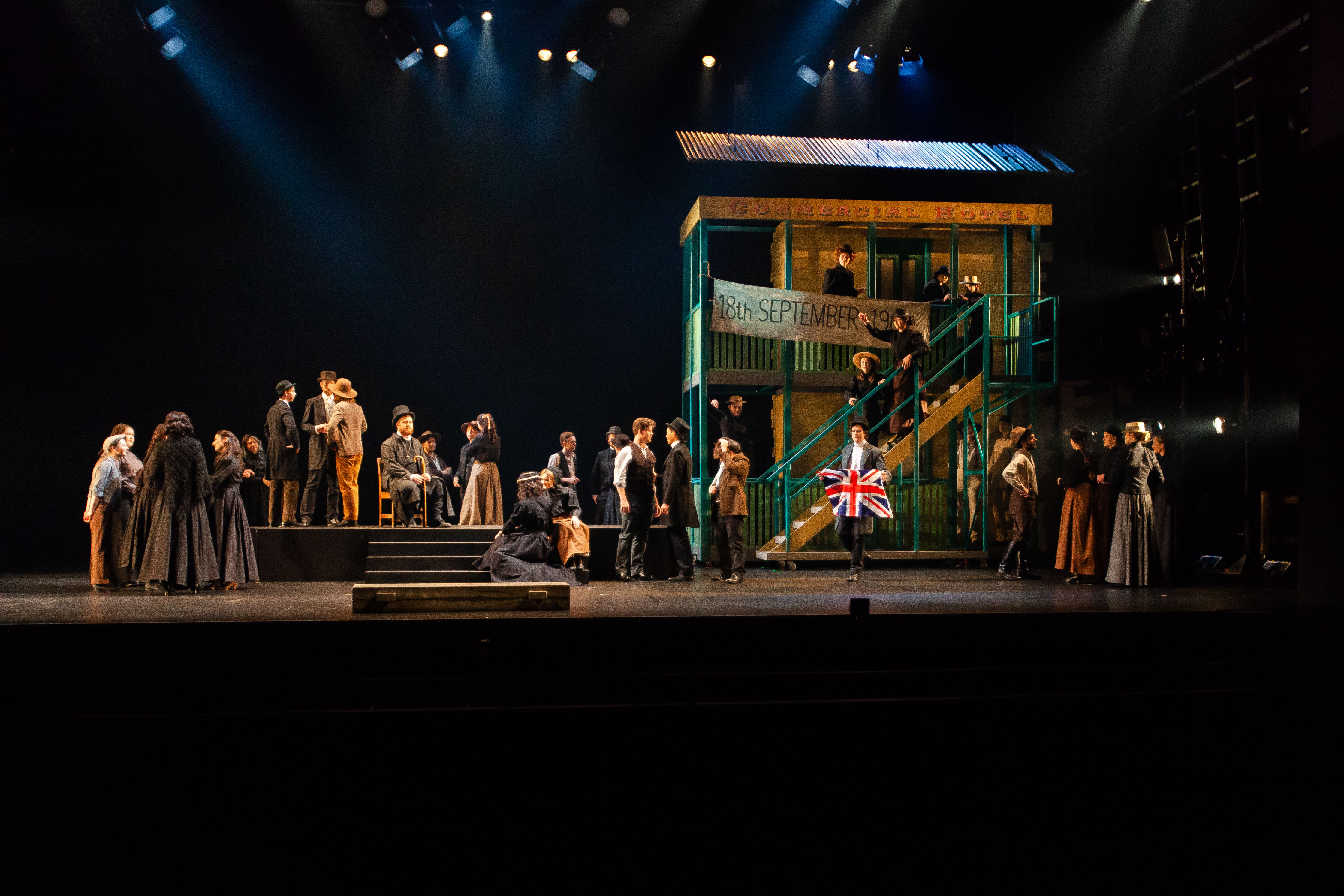
XP: Sure, so it’s set in a small rural Queensland town near a farm called Dry River Run, and the opera follows certain individuals’ struggles with death, inequality, independence, religion and personal ambition, as their future irreversibly changes with the Federation of Australia. It begins the year before Federation [Edit: Federation was on the first of January 1901].

The township. Image: supplied

OB: It revolves mostly around the Callaway family. I am Reverend Callaway. Xenia is playing Mrs Gladys Callaway; she’s my sister-in-law. There’s also her daughter Veronica, and then Veronica’s two love interests— two young men that she’s interested in. These are the five main characters.

Continue reading

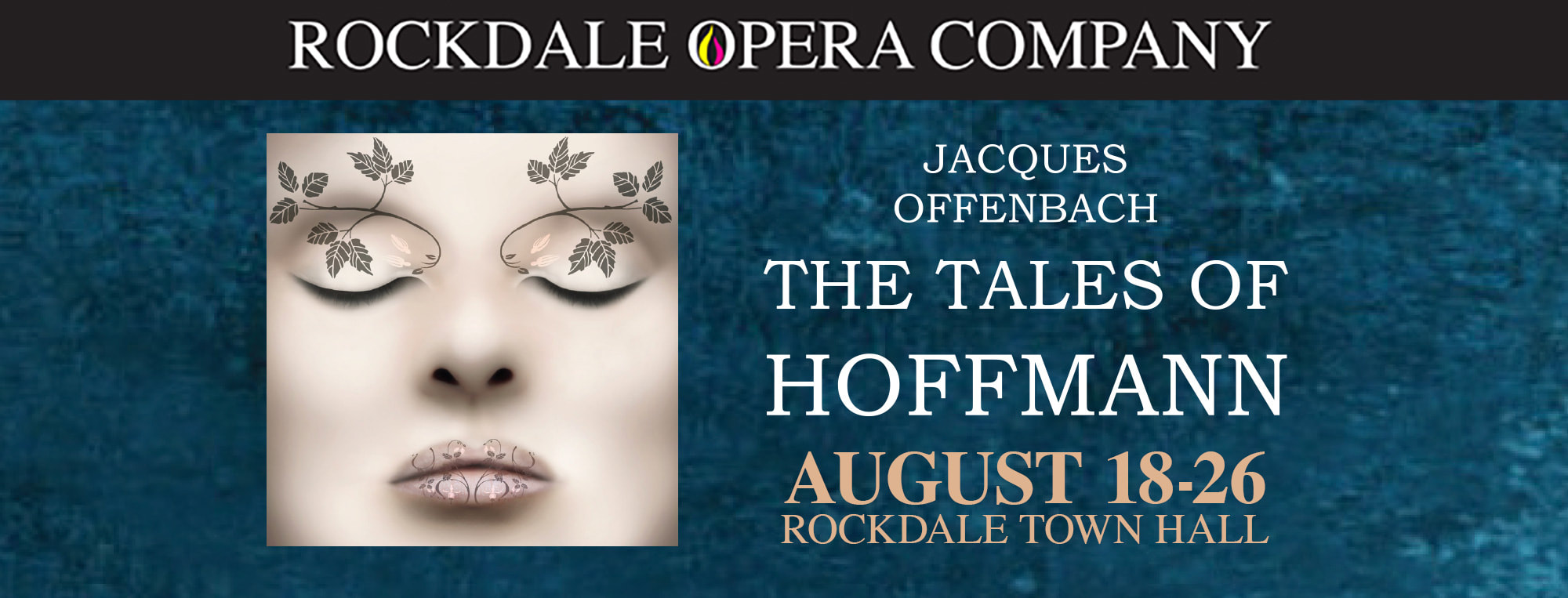
Rockdale Opera’s Tales of Hoffmann: A wonderful pro-am ensemble makes for a very enjoyable night out

Review by Holly Champion. Four out of five stars ****

Firstly, let me apologise for the late publication of this review. I usually try to get reviews out the day after the show – but in this case, I was too busy playing an outrageous Brooklyn flapper in Beyond Cinema’s immersive Great Gatsby show. Ah yes, the dangerous game of writing reviews while also being an artist, and when you invariably end up reviewing your friends—that deserves a whole blog post unto itself. But… you are here for a review, so here it is.

Rockdale Opera is rather unusual in that it is an opera company established by a city Council, rather than by bunch of opera lovers, as were Opera Australia and many others. Rockdale deserve a hearty congratulations on reaching their 70th year in 2018—this not-for-profit is the oldest opera company in continuous operation in Australia. They generally produce at least one full opera and a concert or two per year; I have now seen five of their offerings and been involved in one. The operas are consistently good pro-am productions, sung in English. (More on my beef with that later). Audiences seem to be mostly opera-loving retirees, along with some performing arts professionals and the performers’ families and friends. Nobody is paid* and all proceeds go back into the company. As with most pro-am companies, while the chorus is amateur, the main casts and creative teams are composed of a mix of emerging young opera professionals and older pros/ ex-pros. This production of Offenbach’s Tales of Hoffmann is fairly typical of Rockdale’s quality offerings, but the sheer number of talented performers in its main cast is even more impressive than usual.

Continue reading

Millennial Opera – a new opera cabaret for the Sydney Fringe Festival

We are doing an opera cabaret for the 2018 Sydney Fringe Festival!
Millennial Opera is a brand new show written and produced by Allison Tyra, with music-dramaturgy and direction by yours truly. It features some of opera’s greatest arias and duets, with lyrics rewritten to hold a satirical mirror up to our own Millennial generation (for those still wondering, this means adults born between the early 1980s and 1995). This snarky, smart-ass show is performed by some of Sydney’s best young opera singers. It is part of the 2018 Sydney Fringe Festival, with shows at 8:30 pm on 6, 8 and 9 September at The Newsagency in Camperdown. Get your tickets here: http://www.thenewsagencyvenue.com/shows/milennial
Writer/ Producer Allison Tyra writes: “I love the beautiful music of opera, but constantly find myself frustrated by the plots, characters and original lyrics of the works. After attending a production with particularly bad English translations last year, I started wondering why I couldn’t just re-write the words to create something new. That thought turned into the show we will be staging in September. Subjects range from hipsters and a barista’s lament to online dating and the trials of adults living with their parents. The music featured will include works like Nessun DormaLa Donna e Mobile, and the Habanera aria from Carmen.
While I wrote it partially for my own amusement, the underlying goals are to make opera more accessible by putting it in a less intimidating setting than a three-hour performance; by presenting a greater variety of viewpoints than are typically seen in opera; and by making it more relatable to modern, young audiences.”
MC’d by me in what I trust will be a swashbuckling style, this show features dazzling emerging opera stars Jessica Harper (soprano), Rebecca Hart (mezzo), Carly-Anne Evans (mezzo) and Gerard Atkinson (bass-baritone), with Viet-Anh Nguyen at the piano.